Ancient Greek Philosophers and Poets
Ancient philosophers Aristotle and Plato lived around 400 years before Christ. The earliest copies of their writings date to 600–700 years after they lived. There are no original manuscripts from these men. There are only facsimiles of their work—copies made by others and handed down over time. The Greek poet Homer lived 800–900 years BC. The oldest facsimile of his work, The Iliad, dates to AD 400–500. That is over a thousand years after Homer lived.
How we view the works of ancient Philosophers and Poets
Their schools of thought are taught in colleges. There are countless books on these men, countless commentaries on their works. A person can major in the school of philosophy, based on the writings of these men and many others from that time. Modern medicine, for example, considers Hippocrates, who also lived around 400 BC, the father of medicine. Pythagoras, best known in the modern day for the Pythagorean theorem, was born around 570 BC. Credence is given to these men and their works, yet there are no original documents from any of their hands
Hand Written
There were no printing presses in antiquity. Documents were copied by hand. Yet we still believe that Aristotle, Plato, Homer, Hippocrates and Pythagoras existed and that their works have endured over time. We believe them to be men who walked this earth. We believe them to be historical figures, as we should
New Testament Manuscripts - Stunningly Close to the times of the original writings
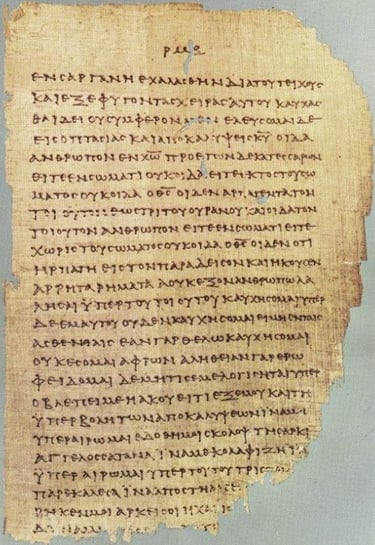
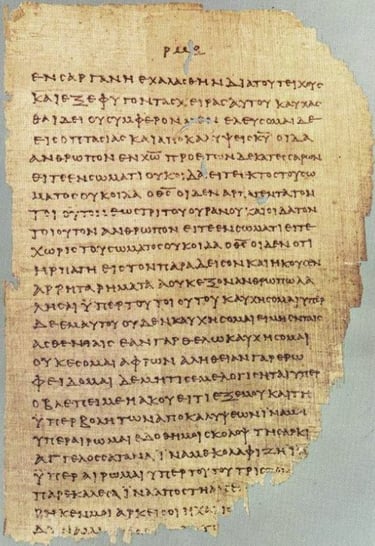
Compare those works of the Greek philosophers and poets to some New Testament manuscripts which proclaim Christ. One copy is Papyrus 52 (P52), which contains part of the Gospel of John. This document dates to only 35–85 years after the original Gospel of John was written by the Apostle John himself. John was a disciple and witness to Christ, and this ancient manuscript, P52, was written within 100 years of when Jesus Christ walked this earth and was most likely in circulation along with the original Gospel of John. There is no copy of any ancient Greek classical writing that comes as close to its original writing as the New Testament manuscripts come to the original Biblical writings. Ancient manuscripts such as P52 and P90 are stunningly close to the actual events of the Bible and the person of Christ. These writings display strong evidence of the eyewitness accounts of Christ. Many of these manuscripts have been found in the last 100 years. Although there are variants between different texts, they do not change the message or the theology of scripture. Variants such as in Acts 26:23 regarding the crucifixion of Jesus Christ—where one text says "Christ" but another says "Messiah"—both speak of Jesus Christ.
Surviving Antiquity and Persecution
There are thousands of ancient New Testament manuscripts—some full, some partial and some fragmented—that are in agreement with each other and in doctrinal agreement with the Bible we have today. The uniformity of many of these ancient texts existed over 200 years before the Roman Emperor Constantine formalized Christianity. They were not written by one centralized, controlling group of people, nor were they modified by Constantine as modern books and movies fictionalize. The original texts, first written by the Apostles and witnesses to Christ, were copied over time by persecuted people who were scattered throughout the world. The transmission of many of these manuscripts occurred before the birth of Constantine. Beginning in AD 64, Christianity was largely outlawed by the Roman Empire. Anyone caught copying these documents could be persecuted or killed. Though New Testament manuscripts were outlawed and many were destroyed, they continued to spread. They were written in various languages such as Syriac (ancient Aramaic), Coptic (ancient Egyptian), Ethiopic (Africa), Gothic (Europe) and Greek, despite the efforts of those seeking their eradication. Again, what is so amazing about these manuscripts is that, though they were copied by a scattered and persecuted people in various places, they agree with each other and are in doctrinal agreement with our Bible today. This was a movement focused on preserving and spreading the same canonical letters and texts—those being the books of our New Testament.
References:
Michael Kruger: How Did We Get the Bible?
https://www.youtube.com/watch?v=DTki0ESXIJk
The Center for the Study of New Testament Manuscripts
James White: How We Got Our Bible
The Enduring Bible
Papyrus 46
Dated AD 175-200
Book of Philippians
Chester Beatty Collection
Dublin, Ireland
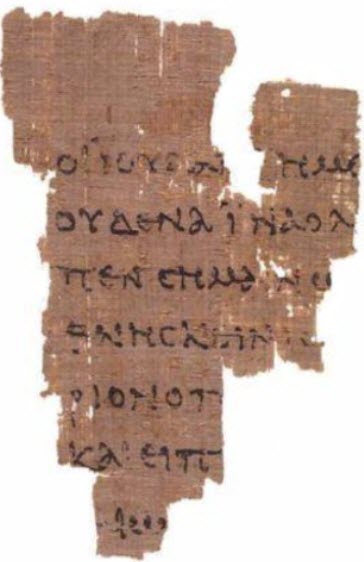
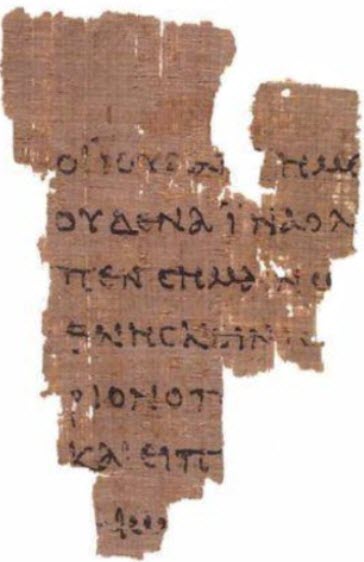
Papyrus 52
Discovered in Egypt
Dates to AD 125-170
Gospel of John chapter 18
Contains verses:
Verses 31-33, 37-38
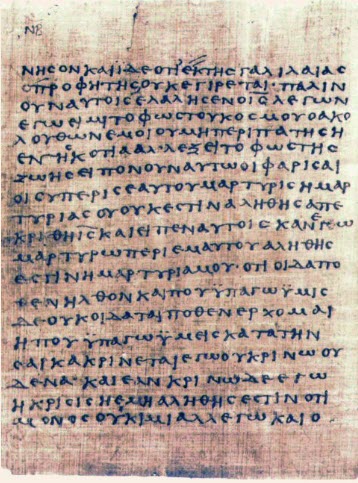
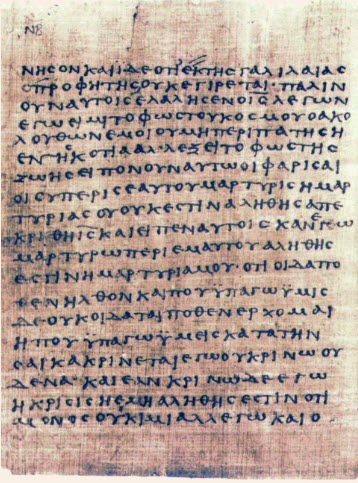
Papyrus 66
Discovered in Egypt
Dates to AD 200
Gospel of John
Grace Alone
Faith Alone
Christ Alone
Glory of God Alone
Scripture Alone
© 2026 evertruth.net All rights reserved.
The Truth in Love
Contact us: letters@evertruth.net